
For years, there’s been a relatively popular, prevailing thought that cold aisle containment (CAC) is the most efficient cooling method in the data center. But do we know exactly why?
Is cold aisle cooling really “the best” method of containment?
The most common response is because in cold aisle containment, the chilled air that exits a raised floor technically only has to travel a short distance up to the server cabinets its meant to cool. Short and sweet, right?
Not so fast. The challenge in this CAC scenario is that the once-chilled air still has a full and complete circulation path that it must travel from the cooling unit to the device and then back to the cooling unit. After it’s all said and done in one complete loop, the savings all but vanish.
Don't forget, too, that even with cold air being dispensed closer to the device, the assumption that this shorter distance reduces the potential for air to mix and become hotter is simply not true.
Once air is allowed to mix, the savings and value continue to diminish.
So, can installing containment reduce mixing of air?
Maybe. The first step of isolation really starts sooner, at the cabinet level.
To effectively implement air containment, it’s essential to seal all openings in and around compute devices. This includes gaps above, below, and along the sides, top, and bottom of the devices. Air naturally follows the path of least resistance, and since warm air is lighter and less dense, it can easily be drawn into device intakes.
In simple terms, if you’re dealing with hot spots or cooling issues, start by focusing on cabinet-level containment before deploying room- or space-level containment. This is the “low-hanging fruit” that can significantly improve cooling efficiency before moving on to containing entire rows of cabinets.
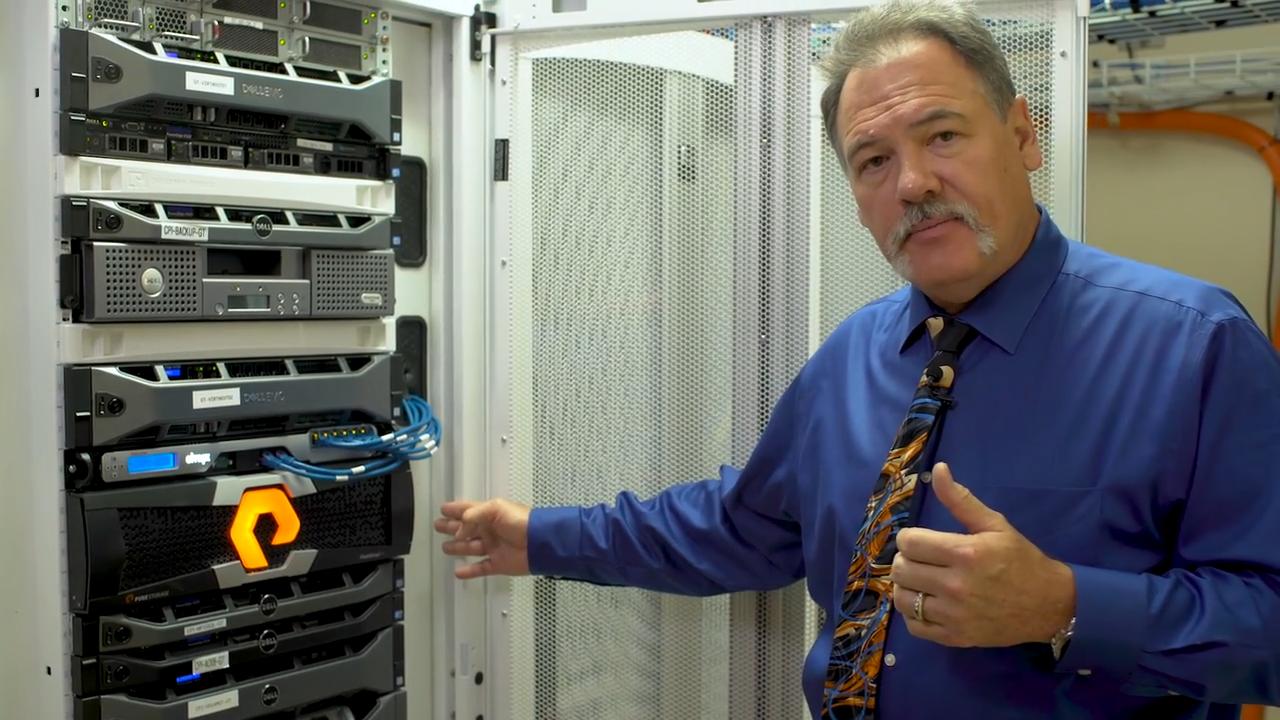
Watch this video to get a better understanding:
Get Free Computational Fluid Dynamics Analysis from CPI
To help you understand the before and after conditions of airflow through your data center cabinet, CPI offers free Computational Fluid Dynamics (CFD) analysis to its customers. CFD uses numerical analysis and data structures to provide visual guidance on the best containment solution and the extent needed for each application and can help justify design changes to your planned or legacy data center.
As part of this service, you'll have access to a panel of onsite consultants, field application engineers and technical experts who provide a rigorous checklist of your installation's existing and planned airflow, equipment placement.
